WHAT IS CHOICE?
The pause that changes everything
Something happens: a friend pushes in, a game is lost, a teacher says no. In that moment there is a small gap before we react.
Children who learn to use that gap, to stop, breathe and think, make better choices. Children who don’t are pushed around by whatever happens to them.
Reacting
- “He started it!”
- “I just lost my temper.”
- “I couldn’t help it.”
- “Everyone was laughing, so I joined in.”
Choosing
- “I stopped and took a breath.”
- “I walked away.”
- “I chose to stay calm.”
- “I thought about what would happen next.”
THE PHRASE CHILDREN TAKE HOME
Pause, then choose
Two seconds to stop and breathe can change the whole day.
WHAT HAPPENS IN CLASS
One core move. One life lesson.
Each week has one core move, taught well. Choice is taught through [the core move for this lesson], alongside the fundamentals every student practises.
HOW THIS LESSON HELPS YOUR CHILD
One lesson, many skills
Like lifting a weight works the main muscle and the muscles that keep you steady, each lesson builds one main set of skills and many more alongside it.
The main muscle
Worked alongside
A STORY THAT SHOWS IT
The marshmallow test
In the famous “marshmallow experiment” at Stanford University, young children were offered one treat straight away, or two if they could wait.
Some children found clever ways to wait: covering their eyes, singing, looking away. Self-control is not something children either have or don’t. It can be learned and practised, just like a kick.
WHAT YOU WILL NOTICE
At home and at school
- Fewer outbursts and tantrums
- They walk away from trouble more often
- They take a breath before answering back
- They accept consequences without blaming others
- They handle teasing and pressure better
HOW YOU CAN HELP AT HOME
Practise the pause
- Notice and praise moments of self-control
- Use the phrase “Pause, then choose” in the moment
- Practise slow breathing together when everyone is calm
- Talk through better choices after an outburst, once things have settled
- Say out loud when you choose to stay calm yourself
THE CHAMPIONS METHOD
How every lesson is taught
Choice is one of nine lessons on the Champions Path. All nine are taught the same way, and for the same reason.
HOW WE DEVELOP IT
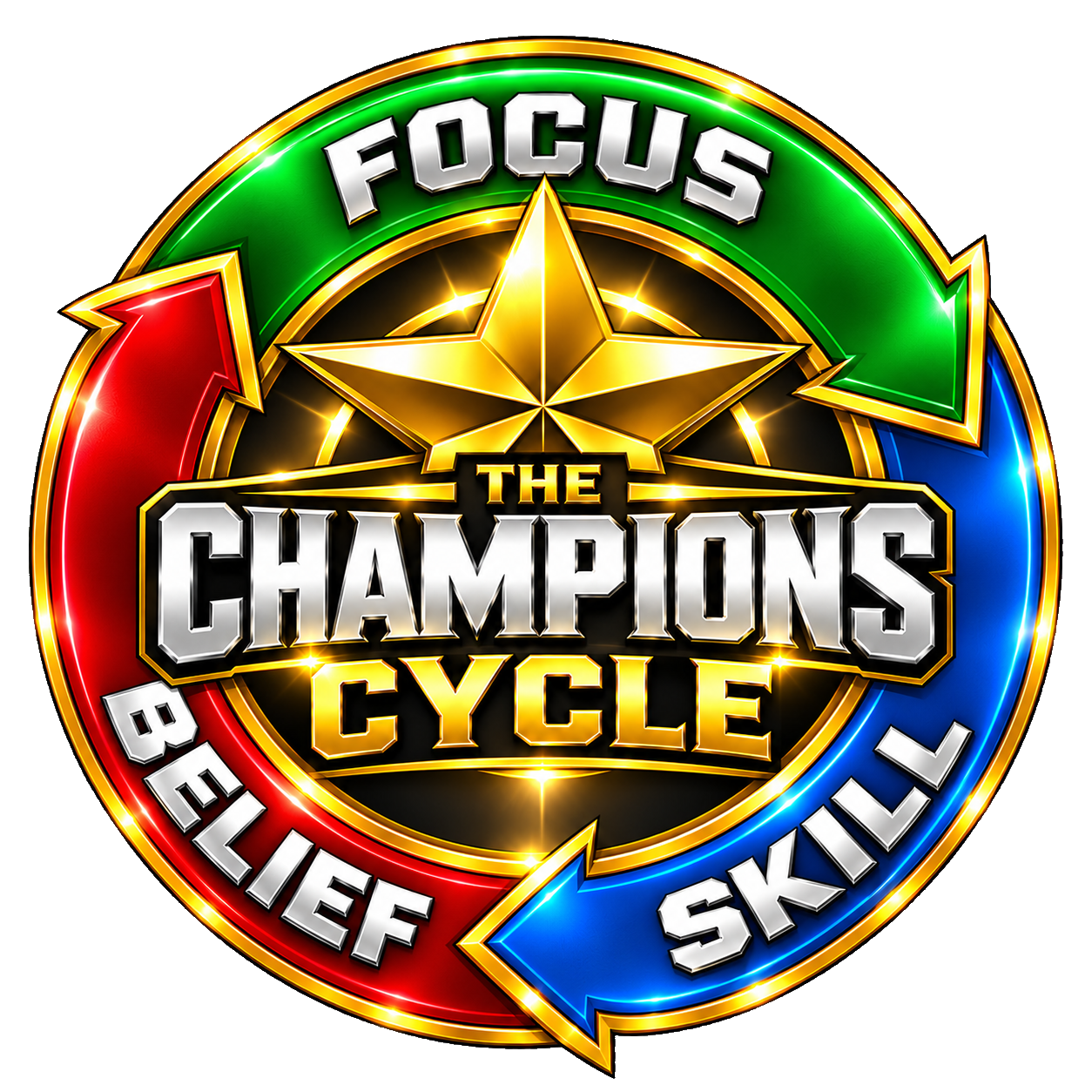
The Champions Cycle
We focus on something, practise until we develop the skill, and through our progress we develop belief. Every class follows the same three steps, whatever the lesson.
Repeat the cycle, and it becomes who you are.
More about the Champions Cycle →WHY WE DO IT · FROM CONSEQUENCE TO CHARACTER
The Behaviour Pyramid
Two children can be standing perfectly still, listening to their teacher. One is listening because they are worried about being corrected. The other is listening because they see themselves as a respectful person. The behaviour looks the same. The reason behind it is completely different.
Our job is to help every child move up the pyramid.
Obedience can disappear when the adult leaves the room. Character goes with the child.
At the top of the pyramid, a child stays calm and chooses well because that is who they are, not because someone is watching.
More about the Behaviour Pyramid →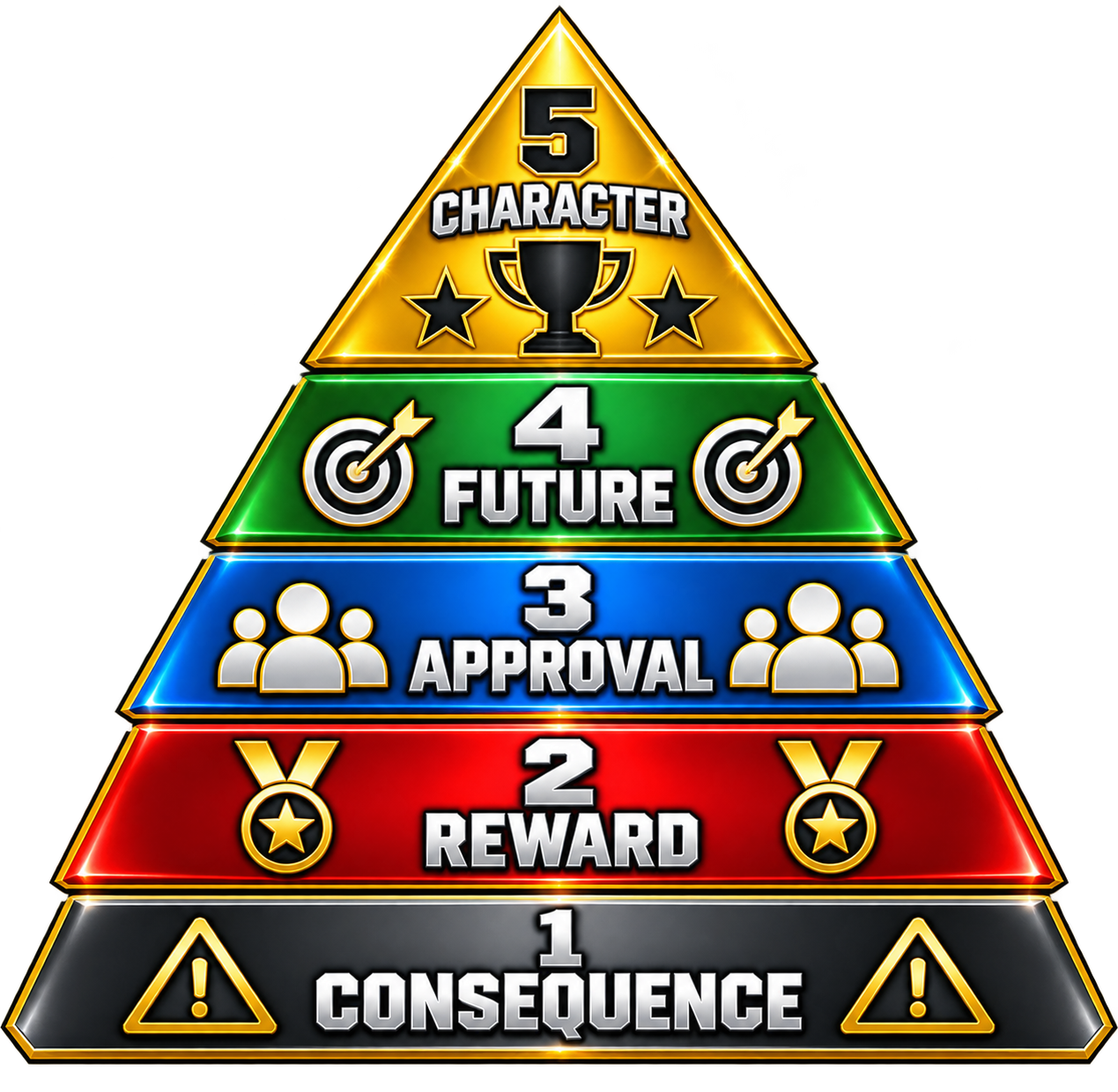
THE WHOLE FAMILY
Who you surround yourself with is who you become
That is why Champions Character involves the whole family. When parents learn the same lessons and use the same words at home, children see themselves the way we help them see themselves in class.

Want this for your child?
Tell us where you are and what you are looking for. We will let you know about classes near you, our online classes, or how we can visit your child’s school.
We will only use your details to reply to your enquiry. See our Privacy Policy.